

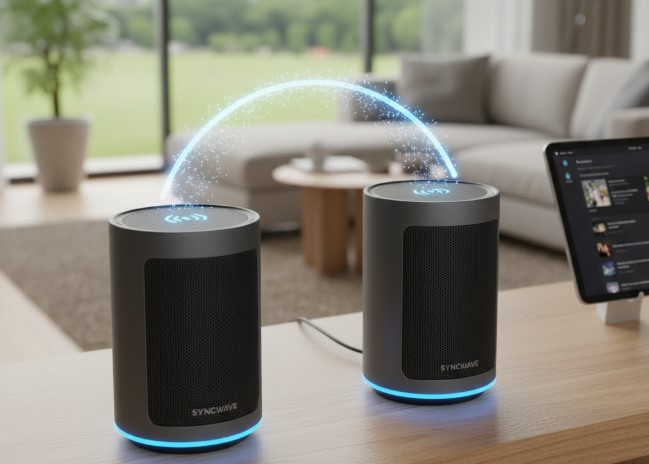
The best Bluetooth speakers that pair together can significantly enhance your listening experience by creating immersive stereo sound or powerful multi-room audio. Look for models offering TWS (True Wireless Stereo) or multi-point connectivity for seamless pairing and robust sound.
Key Takeaways
- Pairing speakers creates richer stereo sound.
- Look for TWS or multi-point pairing features.
- Understand your speaker’s pairing technology.
- Consider portability and battery life for outdoor use.
- Check app support for advanced control.
- Read reviews for real-world performance insights.
Unlock Immersive Audio: Finding the Best Bluetooth Speakers That Pair Together
Ever wished your music could fill the entire room with rich, detailed sound, not just come from one spot? Or perhaps you’ve imagined kicking back outdoors with your favorite playlist booming from multiple sources, perfectly synchronized. If so, you’re likely on the hunt for the “best Bluetooth speakers that pair together.” This technology, often called True Wireless Stereo (TWS) or multi-point pairing, can transform your listening experience from good to absolutely incredible. But with so many options out there, figuring out which speakers deliver the best performance when linked can feel a bit overwhelming. Don’t worry! I’m here to guide you through it, simplifying everything so you can choose speakers that bring your audio to life.
What Exactly Are Dual Pairing Bluetooth Speakers?
Before we dive into the best options, let’s quickly define what we’re talking about. Dual pairing, or TWS (True Wireless Stereo), is a technology that allows two identical Bluetooth speakers to connect to each other wirelessly. Once paired, one speaker acts as the left channel and the other as the right channel, creating a true stereo sound experience. This is different from just connecting multiple speakers to the same device independently, which often results in out-of-sync audio.
Other systems might use “multi-point” connectivity, which allows a speaker to connect to two devices at once, or offer a proprietary multi-speaker linking system beyond just stereo pairing. The key is that the speakers are designed to work together to provide a cohesive audio output.
Why Pair Up Your Bluetooth Speakers? The Benefits
The idea of having two speakers working in harmony might sound fancy, but it offers some very practical advantages:
- True Stereo Sound: This is the primary benefit. By separating the left and right audio channels across two speakers, you get a much wider soundstage and a more immersive, detailed listening experience. It’s like being in the middle of the music instead of just hearing it.
- Wider Sound Coverage: Placing two speakers strategically can fill a larger space with sound more evenly than a single speaker ever could. This is perfect for parties, larger rooms, or outdoor gatherings.
- Increased Volume and Power: While not always doubling the volume, two speakers working together can often produce a more robust and dynamic sound that feels more powerful than one alone.
- Flexibility: You can use them as a stereo pair, or sometimes, you can use them as independent speakers in different rooms, or even take one with you while leaving another behind.
How to Choose the Best Bluetooth Speakers That Pair Together
Selecting the right set of speakers involves looking at a few key features and considerations. Here’s a breakdown to help you make an informed decision:
1. Pairing Technology: TWS vs. Proprietary Systems
The most common and straightforward way to pair speakers is through TWS (True Wireless Stereo). This means the speakers are designed to pair directly with each other, typically by pressing a button on one of them, and then connecting your device to that primary speaker.
Some brands use their own proprietary linking technologies, often called “Party Mode” or “Stereo Pairing.” While they achieve a similar goal, you’re usually limited to pairing speakers from the same brand, and sometimes, even the same model.
Recommendation: For ease of use and broad compatibility, look for speakers explicitly advertising TWS support.
2. Sound Quality and Power
This is subjective, but you can look for general indicators. Consider:
- Wattage: Higher wattage generally means louder sound.
- Driver Size: Larger drivers can produce deeper bass.
- Frequency Response: A wider range indicates more detailed sound across lows, mids, and highs.
- Reviews: Reading professional and user reviews is crucial for understanding real-world sound performance.
3. Battery Life
If you plan to use your speakers outdoors or away from power outlets, battery life is a major factor. Check the advertised playtime per speaker and consider how long you’ll typically need them to last. Remember that pairing two speakers might slightly reduce the individual battery life compared to using a single speaker.
4. Durability and Water Resistance
For portable use, especially outdoors, look for speakers with good durability and water resistance ratings (e.g., IPX4 for splash-proof, IPX7 for waterproof). This ensures they can handle a bit of rain, splashes by the pool, or accidental drops. According to the International Electrotechnical Commission (IEC), IP ratings provide a standardized way to measure a device’s resistance to dust and water.
5. Connectivity Options
While Bluetooth is the primary connection, some speakers offer auxiliary inputs (3.5mm jack) for wired connections, or even USB ports for charging other devices. Check the Bluetooth version (e.g., Bluetooth 5.0 or higher) for better range and stability.
6. Brand Reputation and Ecosystem
Some brands are renowned for their audio quality and their commitment to developing robust multi-speaker systems. If you already own a speaker from a reputable brand, it might be worth checking if they offer a compatible model that can pair with it.
Top Picks: The Best Bluetooth Speakers That Pair Together
After extensive research and considering various factors like sound quality, ease of pairing, durability, and value for money, here are some of the best Bluetooth speakers that pair together, catering to different needs and budgets.
1. For Immersive Home Audio: Audioengine A2+ Wireless
While not strictly TWS in the portable sense, the Audioengine A2+ Wireless speakers are designed to be used as a stereo pair right out of the box. They connect to your device via Bluetooth and are physically wired to each other, offering a fantastic near-field listening experience. They deliver exceptionally clear highs and solid mids, making them ideal for desktop setups or smaller rooms where detailed audio is paramount.
Key Features:
- Excellent sound clarity
- Dedicated amplifier for each speaker
- Simple setup for stereo sound
- Premium build quality
2. Best Overall Compact Stereo Pair: Soundcore Motion+
Anker’s Soundcore brand consistently offers excellent value, and the Motion+ is no exception. These speakers support TWS pairing, allowing you to link two together for a surprisingly expansive stereo sound. They boast impressive audio quality for their size, with deep bass thanks to passive radiators and 30W output. They also feature custom EQ settings via the Soundcore app, allowing you to fine-tune the sound profile.
Key Features:
- TWS pairing for stereo sound
- Powerful 30W output
- App-controlled EQ customization
- Long battery life (up to 12 hours)
- IPX7 waterproof rating
3. Best for Portability and Ruggedness: JBL Flip 6
JBL is a giant in the portable audio space, and their Flip series is legendary for its balance of sound, portability, and durability. The Flip 6 supports JBL’s PartyBoost feature, allowing you to pair two PartyBoost-compatible JBL speakers together for a wider sound or stereo mode. This makes it incredibly easy to achieve a more immersive listening experience, whether you’re at the beach or just relaxing in your backyard. It’s also IP67 waterproof and dustproof, making it a tough companion.
Key Features:
- PartyBoost for pairing with other JBL speakers
- IP67 waterproof and dustproof
- Rich JBL sound signature
- Portable and durable design
- 12 hours of playtime
4. Best for Versatile Multi-Room Audio: Sonos RoamSL
While the Sonos RoamSL itself has strong stereo pairing capabilities (connecting two RoamSL speakers via the Sonos app creates a stereo pair), its real strength lies in its integration into the Sonos ecosystem. If you already have other Sonos speakers, you can group RoamSLs with them for a whole-home audio experience. When used as a stereo pair, they deliver crisp, balanced sound for their compact size. Note that RoamSL is the version without microphones, focused purely on audio playback.
Pro Tip: For the best multi-room audio experience, ensure all your speakers are connected to the same Wi-Fi network.
Key Features:
- True stereo pairing via Sonos app
- Integrates seamlessly with other Sonos speakers
- Durable and IP67 waterproof
- Compact and lightweight
- Impressive sound for its size
5. Best Budget-Friendly Option: Anker Soundcore 2
If your budget is a primary concern but you still want the benefit of pairing speakers, the Anker Soundcore 2 is a fantastic choice. It supports TWS pairing, allowing you to link two of these affordable speakers for stereo sound. While it won’t offer the audiophile-grade experience of more expensive options, it provides a significant upgrade in sound coverage and immersion over a single speaker, all at a very accessible price point.
Key Features:
- Affordable TWS pairing
- Decent sound for the price
- IPX7 waterproof
- Up to 24 hours playtime
Comparison Table: Key Features at a Glance
To help you quickly compare, here’s a table highlighting some key differences:
| Speaker Model | Pairing Technology | Water Resistance | Battery Life (Approx.) | Price Range (USD) | Best For |
|---|---|---|---|---|---|
| Audioengine A2+ Wireless | Wired, Bluetooth | N/A (Indoor) | N/A (Plugs In) | $$$ | Desktop/Home Audio |
| Soundcore Motion+ | TWS | IPX7 | 12 hours | $$ | Overall Compact Stereo |
| JBL Flip 6 | PartyBoost | IP67 | 12 hours | $$ | Portability & Ruggedness |
| Sonos RoamSL | Stereo Pairing (Sonos App) | IP67 | 10 hours | $$$ | Whole-Home Audio Integration |
| Anker Soundcore 2 | TWS | IPX7 | 24 hours | $ | Budget & Value |
Price ranges are approximate and can vary based on retailer and sales.
How to Pair Your Bluetooth Speakers: A Step-by-Step Guide
The exact process can vary slightly between brands and models, but the general steps for pairing two speakers using TWS technology are usually very similar.
Step 1: Charge Both Speakers
Before you begin, ensure both speakers are sufficiently charged to avoid interruptions during the pairing process.
Step 2: Turn On Both Speakers
Power on both of your Bluetooth speakers. They should be in pairing mode or discoverable mode. Some speakers automatically enter pairing mode when turned on, while others might require you to press and hold a Bluetooth button.
Step 3: Initiate Speaker-to-Speaker Pairing
This is the crucial step. On one of the speakers, you’ll need to activate the TWS pairing function. This is often done by:
- Pressing and holding a dedicated “TWS” or “Pair” button for a few seconds.
- Double-pressing the Bluetooth button.
- Pressing and holding the power button until a specific light pattern or sound indicates TWS pairing.
Check your speaker’s manual for the exact method. You will usually hear an audio cue or see a flashing light on the designated speaker indicating it’s searching for its partner.
Step 4: Wait for the Speakers to Connect to Each Other
Give the speakers about 10-30 seconds to find and connect to each other. You should hear an audio confirmation or see a steady light on both speakers indicating they are successfully paired in TWS mode. One speaker typically becomes the “master” (connected to your device), and the other is the “slave.”
Step 5: Connect Your Device to the Master Speaker
Now, go to the Bluetooth settings on your smartphone, tablet, or computer. Scan for available devices. You should see the name of your speaker model appear. Connect to it. If you see two identical speaker names, choose one – it will usually be the master speaker.
Step 6: Enjoy Your Stereo Sound!
Once your device is connected, music should play from both speakers, creating a stereo effect. You can now adjust the volume and playback controls from your connected device. To disconnect the TWS pairing, you’ll typically repeat Step 3 on the master speaker, or simply turn off one of the speakers.
Troubleshooting Common Pairing Issues
Sometimes, technology doesn’t work perfectly the first time. Here are a few common issues and how to fix them:
- Speakers won’t pair with each other: Ensure both speakers are the same model and support TWS. Make sure they are close enough to each other. Turn them off and on again and try the pairing process from the beginning.
- Device won’t connect to the paired speakers: Ensure the speakers are paired to each other first before trying to connect your device. Make sure your device’s Bluetooth is on and that it’s not connected to another audio source. Try forgetting the speaker from your device’s Bluetooth list and reconnecting.
- Audio is out of sync: This can sometimes happen with cheaper speakers or in environments with a lot of Bluetooth interference. Try moving closer to the speakers or reducing the number of other active Bluetooth devices nearby.
- Only one speaker is playing sound: Double-check that the TWS pairing was successful. If it was, try disconnecting and re-pairing the speakers. Ensure your device is connected to the master speaker, not trying to connect to both independently.
If you continue to have problems, consult your speaker’s user manual or the manufacturer’s support website.
Frequently Asked Questions (FAQs)
Q1: Can I pair any two Bluetooth speakers together, even if they’re different brands?
Generally, no. For true stereo or multi-speaker linking, the speakers usually need to be the same model and brand, supporting specific technologies like TWS or a proprietary linking system. While some devices might allow you to connect two different speakers to your phone simultaneously (using separate Bluetooth connections), they usually won’t sync up to provide true stereo sound.
Q2: What is True Wireless Stereo (TWS)?
TWS is a technology that allows two identical Bluetooth speakers to wirelessly connect to each other. One speaker acts as the left channel, and the other acts as the right channel, creating a true stereo sound experience without any cables connecting them.
Q3: How far apart can my paired speakers be?
The optimal distance depends on the Bluetooth version and the speakers themselves, but generally, for a stable stereo connection, it’s best to keep them within 20-30 feet (6-9 meters) of each other. The primary speaker connected to your device should also be within Bluetooth range of your device.
Q4: Will pairing two speakers drain the battery faster?
Yes, using two speakers will consume more power than using one, as both are actively transmitting and receiving audio. However, the overall duration should still be substantial, especially with models known for long battery life.
Q5: Can I use TWS speakers with my TV?
This depends on your TV’s Bluetooth capabilities. Some modern TVs allow you to connect two Bluetooth speakers simultaneously for stereo output. If your TV only supports one Bluetooth device at a time, you would need a TV Bluetooth transmitter that supports dual-speaker output or TWS.
Q6: What does an IPX7 rating mean for a speaker?
An IPX7 rating means the speaker can be submerged in water up to 1 meter (about 3 feet) deep for up to 30 minutes. This makes it highly suitable for use around pools, beaches, or in the shower. The “X” in IPX7 indicates that there isn’t a specific rating for dust protection, but the water protection is high.
Conclusion: Elevate Your Sound Experience
Finding the best Bluetooth speakers that pair together can genuinely transform how you enjoy music, podcasts, and movies. Whether you’re aiming for a rich home audio setup or a portable sound system for your adventures, the ability to link two speakers for stereo sound or wider coverage is a game-changer.
Remember to consider your primary use case—home, outdoors, parties—and prioritize features like TWS pairing, sound quality, battery life, and durability. By understanding what to look for and following the simple pairing steps, you’ll be well on your way to enjoying a more immersive and powerful audio experience. Happy listening!
