

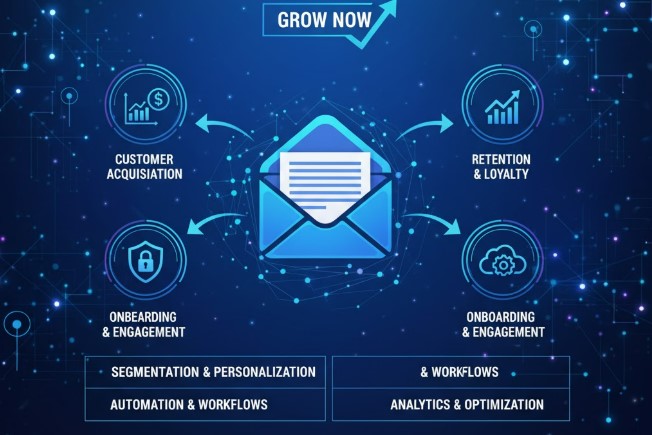
Unlock SaaS growth with a smart email marketing strategy. Learn how to attract, engage, and retain customers through actionable steps and proven tactics.
Key Takeaways
- Build strong customer relationships via email.
- Nurture leads effectively for higher conversions.
- Reduce churn with proactive customer communication.
- Personalize messages for better engagement.
- Automate workflows for efficiency and scale.
Email Marketing Strategy For Saas Companies: Grow Now
Are you a SaaS founder or marketer looking to boost your company’s growth? You’ve likely heard that email marketing is powerful, but building an effective email marketing strategy for a SaaS business can feel overwhelming. How do you move beyond just sending out newsletters and truly leverage email to attract new users, keep existing ones happy, and ultimately drive revenue? Don’t worry, this guide is designed to break down the complexities into a clear, step-by-step process. We’ll explore how to create an email marketing strategy for your SaaS company that fosters growth, from your very first contact to long-term customer loyalty.
Why Email Marketing is Crucial for SaaS Growth
In the fast-paced world of Software as a Service (SaaS), customer relationships are everything. Unlike physical products, SaaS is about an ongoing relationship where customers pay subscription fees for continuous access to your software. This makes customer retention just as important, if not more so, than customer acquisition. Email marketing excels in this area. It allows you to communicate directly, personally, and consistently with your audience at various stages of their journey. A well-crafted email marketing strategy for SaaS companies can significantly impact key metrics like customer acquisition cost (CAC), customer lifetime value (CLTV), and user engagement.
Consider this: The average ROI for email marketing is around $36 for every $1 spent, according to Campaign Monitor. This makes it one of the most cost-effective marketing channels available. For SaaS businesses, this translates into a powerful tool for nurturing leads, onboarding new users, educating existing customers, and even recovering lost revenue. Let’s dive into how you can build your own winning strategy.
Step 1: Define Your Goals and Target Audience
Before you send a single email, you need to know what you want to achieve and who you’re talking to. This foundational step is critical for an effective email marketing strategy for SaaS companies.
Setting SMART Goals
Your goals should be Specific, Measurable, Achievable, Relevant, and Time-bound (SMART). Instead of “get more users,” aim for goals like:
- Increase trial sign-ups by 15% next quarter.
- Boost conversion rates from trial to paid users by 10% within six months.
- Reduce customer churn by 5% in the next year.
- Improve feature adoption for key product areas by 20% over the next three months.
Understanding Your Ideal Customer Profile (ICP)
Who is your SaaS built for? Your ICP defines the type of company or individual who gets the most value from your product. Understanding their demographics, firmographics (for B2B), pain points, challenges, and motivations is essential. This knowledge will shape your messaging, the content you share, and the segments you target.
Mapping the Customer Journey
How does a potential customer discover, evaluate, purchase, and use your SaaS? Map out the typical stages: Awareness, Consideration, Decision, Onboarding, Adoption, Retention, and Advocacy. Your email marketing strategy will have different objectives and campaigns for each stage.
For instance, a prospect in the “Awareness” stage might receive emails introducing the problem your SaaS solves, while a “recently signed-up” user will get onboarding tips. This understanding forms the backbone of a targeted email marketing strategy for SaaS companies.
Step 2: Build Your Email List Legally and Ethically
Your email list is your direct line to your audience. Growing it with engaged subscribers is paramount. Never buy email lists; focus on attracting genuine interest.
Website Opt-in Forms
Place clear and compelling sign-up forms on your website. Consider:
- Homepage: A subtle but visible form.
- Blog: Offer valuable content upgrades (e.g., checklists, templates) in exchange for an email.
- Pricing Page: Capture leads who are close to deciding.
- Footer: A standard place for newsletter sign-ups.
Lead Magnets
Offer something valuable in exchange for an email address. For SaaS, this could be:
- Free templates or checklists related to your industry.
- Webinars or on-demand training.
- Ebooks or whitepapers detailing industry insights.
- A free trial or demo of your software.
In-App Sign-ups
Once users are interacting with your product, you can prompt them to subscribe to updates or relevant newsletters. Ensure this doesn’t interrupt their core product experience.
Compliance with Regulations
Always adhere to data privacy laws like GDPR (General Data Protection Regulation) and CCPA (California Consumer Privacy Act). This means getting explicit consent (no pre-checked boxes) and making it easy for subscribers to unsubscribe. A reputable source like the U.S. Federal Trade Commission (FTC) provides guidance on email marketing best practices and legal requirements.
Step 3: Segment Your Email List
Not all subscribers are the same. Segmenting your list allows you to send more relevant and personalized emails, leading to higher engagement and conversion rates. This is a hallmark of an effective email marketing strategy for SaaS companies.
Common Segmentation Criteria for SaaS:
- Demographics/Firmographics: Job title, industry, company size.
- Behavioral Data: Features used, login frequency, pages visited on your website, past purchases, email engagement (opens, clicks).
- Lifecycle Stage: Trial user, new customer, active user, lapsed user, churned customer.
- Interest: Topics they’ve shown interest in through content downloads or website activity.
- Subscription Plan: Free tier, basic, premium.
Example of Segmentation in Action
Imagine you have a project management SaaS. You can segment users based on their role:
- Project Managers: Send tips on efficient project planning and team delegation.
- Team Members: Share content on task management and collaboration best practices.
- Executives: Provide reports on team productivity and ROI insights.
This targeted approach makes your email marketing strategy for SaaS much more impactful.
Step 4: Plan Your Email Campaigns
With your list segmented, it’s time to plan the specific types of emails you’ll send. A comprehensive email marketing strategy for SaaS companies includes several key campaign types.
Welcome Series
This is your first impression after someone signs up. For trial users, it’s about guiding them to experience the core value of your product quickly. For new customers, it’s about confirming their decision and setting them up for success.
- Email 1: Welcome and set expectations.
- Email 2: Highlight key features and benefits.
- Email 3: Offer a quick win or tutorial.
- Email 4: Share success stories or case studies.
- Email 5: Prompt them to try a specific advanced feature or offer support.
Onboarding Emails
Crucial for SaaS. These emails help new users understand and adopt your product, leading to higher retention. Focus on guiding them through initial setup, key workflows, and demonstrating value.
Nurturing Emails
For leads who aren’t ready to buy or trial users who haven’t converted. These emails provide value, build trust, and position your SaaS as the solution to their problems. Content can include blog posts, case studies, webinars, and industry insights.
Product Updates and Feature Announcements
Keep your users informed about improvements and new functionalities. Explain the benefits of these updates and how they can use them.
Re-engagement Campaigns
Target inactive subscribers or users. Try to understand why they’ve disengaged and offer incentives or highlight new features to bring them back.
Churn Prevention/Win-back Campaigns
For customers who have recently cancelled or are showing signs of churning. Try to understand their reasons, offer solutions, or provide an incentive to stay.
Promotional Emails
Use these sparingly. They can be for limited-time offers, discounts on upgrades, or special bundles. Ensure they align with the user’s value and journey.
Step 5: Craft Compelling Email Content
The best strategy is useless without content that resonates. For a SaaS email marketing strategy, your content should be informative, valuable, and problem-solving.
Subject Lines
Your subject line is the gatekeeper. Make it clear, concise, and intriguing. Use personalization and emojis where appropriate. Test different options!
Personalization
Use merge tags to include the recipient’s name. Go further by referencing their company, industry, or past behavior. For example, “John, are you struggling with [specific problem your SaaS solves]?”
Clear Value Proposition
Every email should communicate a clear benefit or what’s in it for the reader. Focus on solving their problems or improving their lives/work.
Call to Action (CTA)
What do you want the reader to do next? Use strong, action-oriented CTAs like “Start Your Free Trial,” “Learn More,” “Watch the Demo,” or “Upgrade Now.” Make CTAs prominent and easy to click.
Mobile Responsiveness
Most emails are opened on mobile devices. Ensure your emails look good and are easy to read on any screen size.
Visuals and Formatting
Use a clean design. Incorporate images or GIFs sparingly. Break up text with short paragraphs, bullet points, and headings to improve readability.
Pro Tip: Use A/B testing for your subject lines, CTAs, and even the content itself. Small changes can lead to significant improvements in open and click-through rates.
Step 6: Automate Your Email Workflows
Automation is key to scaling your email marketing without increasing your workload proportionally. It ensures timely and relevant communication.
Key SaaS Email Automation Workflows:
- Welcome Series: Automatically sent when someone subscribes.
- Onboarding Flow: Triggered by user sign-up.
- Trial Expiration Reminders: Emails sent leading up to trial end.
- New Feature Adoption: For users who haven’t tried a new feature.
- Inactive User Re-engagement: Triggered after a period of inactivity.
- Customer Milestone Emails: Celebrating anniversaries or achievements within the app.
- Post-Purchase Follow-ups: Confirming order, asking for feedback.
Choosing the Right Email Marketing Platform
Many platforms offer robust automation features. Popular choices for SaaS include:
| Platform | Key Strengths for SaaS | Ideal For |
|---|---|---|
| HubSpot Marketing Hub | All-in-one CRM, marketing automation, sales tools. Excellent for B2B and complex workflows. | Companies seeking integrated solutions. |
| ActiveCampaign | Powerful automation, CRM, and email marketing. Great segmentation capabilities. | Growing SaaS businesses focused on automation. |
| Mailchimp | User-friendly interface, good for beginners with growing automation needs. | Startups and small to medium SaaS. |
| Customer.io | Advanced segmentation and behavioral messaging. Focuses on transactional and lifecycle emails. | SaaS companies prioritizing deep user engagement. |
| Sendinblue (now Brevo) | Affordable with a good range of features, including SMS and chat. | Cost-conscious SaaS businesses needing broad communication channels. |
Consider tools that integrate well with your existing tech stack (e.g., CRM, product analytics). For example, integrating your CRM with your email platform allows for richer segmentation based on sales data.
Step 7: Measure, Analyze, and Optimize
Your email marketing strategy for SaaS isn’t static. Continuous analysis and optimization are vital for sustained growth.
Key Metrics to Track:
- Open Rate: Percentage of recipients who opened your email.
- Click-Through Rate (CTR): Percentage of recipients who clicked a link in your email.
- Conversion Rate: Percentage of recipients who completed a desired action (e.g., signed up for a trial, made a purchase).
- Bounce Rate: Percentage of emails that couldn’t be delivered. (Hard bounces indicate permanent issues; soft bounces are temporary).
- Unsubscribe Rate: Percentage of recipients who unsubscribed. A high rate might signal irrelevant content or too frequent emails.
- List Growth Rate: How quickly your email list is growing.
- ROI: Revenue generated compared to the cost of your email marketing efforts.
Analyzing Performance
Use your email marketing platform’s analytics dashboard. Look for trends:
- Which subject lines get the most opens?
- Which CTAs drive the most clicks?
- Which segments are most engaged?
- When is the best time to send emails for your audience?
Optimization Strategies
Based on your analysis, make adjustments:
- A/B Test: Experiment with subject lines, send times, content, and CTAs.
- Clean Your List: Regularly remove inactive or invalid email addresses to improve deliverability and reduce costs.
- Refine Segmentation: Create more granular segments based on new data.
- Improve Content: Focus on creating more of what your audience responds to.
According to HubSpot, businesses that segment their email campaigns see a 14.31% increase in open rates and a 10.93% increase in clicks, underscoring the importance of this optimization step in your email marketing strategy for SaaS companies.
Frequently Asked Questions (FAQ)
What is the most important email campaign for a new SaaS company?
The welcome series. It’s your chance to make a great first impression, guide new users, and demonstrate the core value of your SaaS product immediately, setting the stage for retention.
How often should SaaS companies send emails?
There’s no one-size-fits-all answer. It depends on your audience and the type of email. For onboarding and product updates, you might send more frequently. For newsletters or promotional content, less often. The key is to provide value consistently without overwhelming your subscribers. Always include an easy unsubscribe option.
How can I get more subscribers for my SaaS email list?
Offer irresistible lead magnets on your website, use clear opt-in forms, promote your newsletter on social media, and consider offering a free trial or freemium version of your SaaS. Ensure all methods comply with privacy regulations like GDPR.
What’s the difference between email marketing for SaaS and e-commerce?
E-commerce emails often focus on product discovery, immediate purchase, and abandoned cart recovery. SaaS emails focus on ongoing value, user adoption, retention, and customer education, reflecting the subscription-based, relationship-driven nature of the business model.
What are the biggest mistakes SaaS companies make with email marketing?
Common mistakes include not segmenting their lists, sending generic messages, not automating key workflows (like onboarding), neglecting mobile optimization, and failing to track and analyze performance metrics. Not adhering to privacy laws is also a significant error.
Is email marketing still relevant for SaaS in 2023 and beyond?
Absolutely. While social media and other channels are important, email remains one of the most direct, personal, and cost-effective ways to communicate with customers. For SaaS, where relationships and ongoing value are key, email is indispensable.
Conclusion
Developing a robust email marketing strategy for SaaS companies is not just about sending emails; it’s about building relationships, guiding users, and demonstrating continuous value. By focusing on clear goals, understanding your audience, building your list ethically, segmenting effectively, planning diverse campaigns, crafting compelling content, leveraging automation, and constantly analyzing your results, you can transform your email marketing into a powerful engine for SaaS growth. Start implementing these steps today, and watch your customer engagement and revenue climb.
