

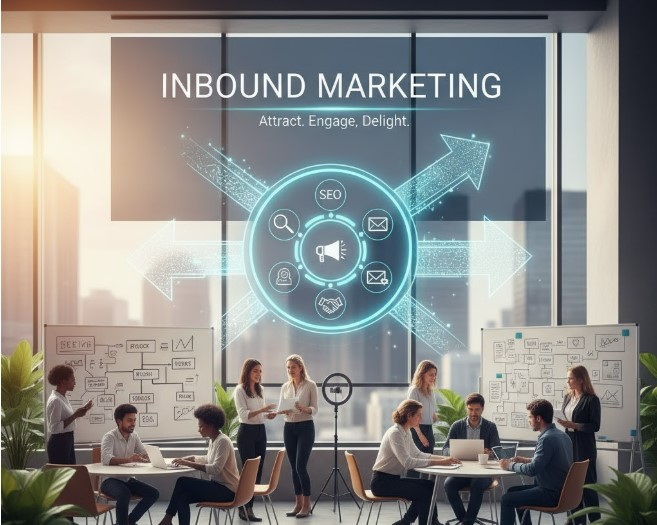
HubSpot’s inbound marketing approach helps businesses attract customers by creating valuable content and experiences. Learn how HubSpot empowers this strategy.
Key Takeaways
- Attract customers with valuable content using HubSpot.
- Nurture leads through personalized communication.
- Close deals efficiently with CRM tools.
- Delight customers for long-term loyalty.
- HubSpot integrates tools for inbound success.
- Master inbound marketing with HubSpot’s resources.
HubSpot: The Power Of Inbound Marketing
Are you struggling to connect with potential customers online? Do you find traditional advertising methods less effective than they used to be? If so, you’re not alone. Many businesses face the challenge of cutting through the noise to reach their audience. But what if there was a smarter, more customer-centric way to grow your business? That’s where inbound marketing, powered by HubSpot, comes in. This guide will walk you through the essentials, making it easy to understand and implement the power of inbound marketing with HubSpot.
What Exactly Is Inbound Marketing?
Imagine you’re looking for a solution to a problem, like how to bake the perfect sourdough bread. You probably wouldn’t appreciate someone interrupting your search with a loud advertisement for a different kind of bread. Instead, you’d likely search online. You might find a blog post with a great recipe, a video tutorial, or a helpful forum discussion. This is the essence of inbound marketing: attracting customers by creating valuable content and experiences tailored to them. Instead of pushing your product or service onto people, you draw them in by being genuinely useful and helpful.
Inbound marketing focuses on building trust and relationships. It’s about understanding your ideal customer, anticipating their needs and questions, and providing them with the information they’re looking for, precisely when they’re looking for it. This approach is built on the idea that people prefer to be educated rather than sold to.
Why Is Inbound Marketing So Powerful?
In today’s digital world, consumers are more empowered than ever. They have access to vast amounts of information and can easily ignore or block intrusive advertisements. Inbound marketing flips the script. It respects the consumer’s journey and aims to be discovered organically.
Think about it: when you find a helpful article or a useful tool online, you’re more likely to trust the source. This trust is the foundation of inbound marketing. By consistently providing value, businesses can:
- Attract more qualified leads: People who find you through helpful content are often already interested in what you offer.
- Build stronger customer relationships: Trust and authority are established from the first interaction.
- Achieve higher conversion rates: Engaged leads are more likely to become paying customers.
- Lower marketing costs: Inbound marketing can be more cost-effective than traditional outbound methods over time.
- Increase customer loyalty: By continuing to provide value, you keep customers engaged and happy.
According to HubSpot’s own research, companies that blog consistently generate significantly more leads. For example, businesses that publish 16+ blog posts per month see more than 4 times the number of leads compared to those publishing 0-4 posts per month. This highlights the power of consistent, valuable content creation. Source: HubSpot Research
Introducing HubSpot: Your All-In-One Inbound Marketing Platform
While the principles of inbound marketing are clear, implementing them effectively can seem daunting. This is where HubSpot shines. HubSpot is a leading Customer Relationship Management (CRM) platform that provides a suite of tools designed to help businesses execute every stage of the inbound methodology.
HubSpot simplifies inbound marketing by offering integrated solutions for marketing, sales, and customer service. Whether you’re a small startup or a growing enterprise, HubSpot can help you attract, engage, and delight your customers.
The Four Pillars Of Inbound Marketing, Powered By HubSpot
HubSpot’s philosophy is built around a framework that guides businesses through attracting strangers, converting them into leads, closing them into customers, and delighting them into promoters. Let’s break down each stage and how HubSpot helps.
1. Attract: Turning Strangers into Visitors
The first step is to attract the right audience to your website. You want to draw in people who are likely to be interested in your products or services. This is achieved through creating valuable, relevant content that addresses their pain points and questions.
How HubSpot Helps You Attract:
- Blogging: HubSpot’s blogging tools make it easy to create, publish, and promote SEO-optimized blog posts. You can plan your content, optimize for keywords, and track performance.
- SEO Tools: HubSpot offers built-in SEO tools that help you research keywords, optimize your content, and monitor your website’s search engine ranking. This ensures people searching for solutions find you.
- Social Media Publishing: Schedule and publish posts across various social media platforms directly from HubSpot. You can also monitor engagement and track what resonates with your audience.
- Content Strategy: HubSpot provides resources and tools to help you develop a content strategy that aligns with your target audience’s needs and interests.
Think of it like this: if you run a bakery, instead of putting up a sign that shouts “Buy Our Bread!”, you’d write a blog post titled “5 Secrets to a Perfect Crusty Sourdough Loaf.” People looking for that information will find your bakery online, learn from you, and be more inclined to visit.
2. Engage: Turning Visitors into Leads
Once you’ve attracted visitors, the next step is to convert them into leads. This means getting them to share their contact information with you, typically in exchange for something valuable. This could be an e-book, a webinar, a free trial, or a consultation.
How HubSpot Helps You Engage:
- Landing Pages: Create professional, high-converting landing pages without needing to code. These pages are designed to capture lead information.
- Forms: Embed customizable forms on your website and landing pages to collect visitor data. HubSpot automatically adds these contacts to your CRM.
- Calls-to-Action (CTAs): Design compelling CTAs that encourage visitors to take the next step, whether it’s downloading a resource or signing up for a newsletter.
- Chatbots and Live Chat: Engage visitors in real-time, answer their questions, and qualify them as leads directly on your website.
Using the bakery example, after reading your sourdough post, a visitor might see a CTA offering a free downloadable guide: “Master Sourdough Baking: A Comprehensive Guide.” To get it, they fill out a simple form with their name and email. Now, they’re a lead, and you have permission to communicate with them further.
3. Close: Turning Leads into Customers
With leads in hand, it’s time to turn them into paying customers. This stage involves nurturing those relationships, understanding their specific needs, and presenting your solution as the best fit.
How HubSpot Helps You Close:
- CRM: At the heart of HubSpot is its powerful, free CRM. It organizes all your contact information, tracks interactions, and gives your sales team a clear view of each lead’s journey.
- Email Marketing: Send segmented, personalized email campaigns to nurture your leads. Automate follow-up sequences to keep your brand top-of-mind.
- Sales Sequences: Automate personalized outreach to leads, ensuring timely follow-ups without manual effort.
- Deal Management: Track your sales pipeline visually, manage deals, and forecast revenue. This helps your sales team work more efficiently.
For your sourdough customer, you might send them a series of emails offering tips on maintaining their starter, different recipe variations, and eventually, an offer for your premium sourdough baking class. The sales team can see that the lead opened previous emails about starters, allowing them to tailor their pitch.
4. Delight: Turning Customers into Promoters
The inbound journey doesn’t end when a sale is made. The “delight” stage focuses on providing exceptional customer service and support to ensure customers are happy and become loyal advocates for your brand. Happy customers buy more, stay longer, and refer others.
How HubSpot Helps You Delight:
- Customer Service Hub: Manage customer support tickets, track conversations, and provide timely assistance through various channels like email, chat, and phone.
- Surveys: Use tools like the Net Promoter Score (NPS) survey to gauge customer satisfaction and identify areas for improvement.
- Knowledge Base: Create a self-service portal where customers can find answers to common questions, reducing support load and empowering users.
- Automation: Set up automated workflows to onboard new customers, send check-in emails, or offer exclusive content to existing clients.
Continuing the bakery example, you might send your new sourdough baking class students a follow-up email congratulating them, offering access to an exclusive online community for bakers, and asking for their feedback on the class. This creates a positive ongoing experience.
HubSpot vs. Traditional Marketing: A Quick Comparison
To truly grasp the power of HubSpot’s inbound approach, it’s helpful to compare it with traditional outbound marketing methods.
| Feature | Inbound Marketing (HubSpot) | Traditional Outbound Marketing |
|---|---|---|
| Approach | Attracts customers through valuable content. | Pushes messages to a broad audience. |
| Focus | Customer needs and interests. | Product or service features. |
| Communication | Permission-based, two-way conversations. | Interruptive, one-way broadcasts. |
| Channels | Blogs, SEO, social media, content marketing. | TV ads, radio ads, cold calls, print ads. |
| Cost-Effectiveness | Higher ROI over time, lower long-term costs. | Can be expensive with lower, less measurable ROI. |
| Customer Relationship | Builds trust, authority, and long-term loyalty. | Often perceived as intrusive, can damage brand image. |
Studies consistently show that inbound marketing strategies, when executed well, yield better results. For instance, according to a Salesforce report, 70% of consumers surveyed said they would prefer to receive updated product information via blogs rather than traditional ads. This tells us that consumers genuinely seek out information that helps them rather than being interrupted by promotional messages.
Getting Started with HubSpot and Inbound Marketing
Embarking on your inbound marketing journey with HubSpot might seem like a big step, but it’s designed to be accessible. Here’s a simplified roadmap:
Step 1: Define Your Goals and Target Audience ($5$)
Before you do anything else, understand what you want to achieve. Are you looking to increase website traffic, generate more leads, or boost sales? Then, get to know your ideal customer intimately. Create buyer personas – semi-fictional representations of your ideal customers, including their demographics, goals, challenges, and motivations.
Step 2: Set Up Your HubSpot Account
HubSpot offers a free CRM and various free tools to get you started. Visit the HubSpot website and sign up. Explore the platform to familiarize yourself with its different hubs (Marketing, Sales, Service, CMS, Operations).
Step 3: Start Creating Content
Begin with your blog. Identify topics that your target audience is searching for. Use HubSpot’s SEO tools to guide your keyword research. Write clear, helpful, and engaging blog posts. Don’t forget to think about other content formats like e-books, checklists, or infographics.
Step 4: Implement Lead Capture Mechanisms
As you publish content, create enticing offers (like downloadable guides) that visitors will want in exchange for their contact information. Use HubSpot’s landing page and form builders to create these offers and capture leads seamlessly.
Step 5: Nurture Your Leads
Once you have leads, engage them with relevant email marketing campaigns. Use HubSpot’s email tools to send personalized messages that guide them further down the sales funnel. Segment your lists based on their interests and behavior.
Step 6: Analyze and Optimize
HubSpot provides robust analytics. Regularly review your website traffic, lead generation rates, conversion rates, and customer engagement. Use this data to understand what’s working and what’s not, and continuously refine your strategy.
Pro Tip: HubSpot Academy offers a wealth of free courses and certifications on inbound marketing, content creation, SEO, and more. Leveraging these resources can significantly accelerate your learning curve and skill development.
HubSpot’s Free Tools: A Powerful Starting Point
One of the most attractive aspects of HubSpot for beginners is its suite of powerful free tools. These tools provide a robust foundation for implementing inbound marketing strategies without a significant upfront investment.
- HubSpot CRM: Organize contacts, track deals, and manage your sales pipeline. It’s the central nervous system for your customer relationships.
- Email Marketing: Send professional email newsletters and campaigns to up to 2,000 emails per month.
- Landing Pages: Build and publish unlimited landing pages to capture leads.
- Forms: Embed customizable forms on your website to gather contact information.
- Ads Management: Connect your Google, Facebook, and LinkedIn ad accounts to track ROI and manage campaigns.
These free tools empower small businesses and startups to adopt inbound marketing principles and see tangible results. As your business grows, you can explore HubSpot’s paid tiers for more advanced features and scalability.
Measuring Success with HubSpot Analytics
A key benefit of using a platform like HubSpot is the ability to track and measure the effectiveness of your inbound marketing efforts. Data-driven decisions are crucial for success.
HubSpot provides dashboards and reports that give you insights into:
- Website Traffic: Where are your visitors coming from? Which pages are they viewing?
- Lead Generation: How many leads are you generating from different sources? What is your conversion rate?
- Email Performance: Open rates, click-through rates, and unsubscribe rates for your email campaigns.
- Sales Performance: Track your sales pipeline, deal velocity, and closed-won revenue.
- Customer Engagement: Monitor how customers interact with your support channels and content.
This detailed analytics capability allows you to identify what’s working, what needs improvement, and where to allocate your marketing resources for maximum impact. For example, if you notice that blog posts about “beginner SEO tips” are driving a lot of traffic and leads, you’ll know to create more content on similar topics.
Frequently Asked Questions (FAQ)
What is the core philosophy behind inbound marketing?
The core philosophy is to attract, engage, and delight customers by providing valuable content and personalized experiences, rather than interrupting them with unsolicited advertising.
Is HubSpot only for large companies?
No, HubSpot is designed for businesses of all sizes. They offer a free CRM and free tools that are excellent for small businesses and startups to begin their inbound marketing journey.
How does inbound marketing differ from outbound marketing?
Inbound marketing focuses on earning attention by being helpful and providing value, while outbound marketing focuses on pushing messages to a broad audience through traditional advertising methods like TV ads or cold calls.
Can I use HubSpot without paying for it?
Yes, HubSpot offers a robust set of free tools, including CRM, email marketing, landing pages, and forms, which are sufficient for many businesses to start with inbound marketing.
What kind of content works best for inbound marketing?
Content that addresses your target audience’s problems, answers their questions, and educates them is most effective. This includes blog posts, e-books, guides, webinars, infographics, and videos.
How long does it take to see results with inbound marketing?
Inbound marketing is a long-term strategy. While you might see some initial results relatively quickly with well-optimized content, consistent effort over several months is typically needed to build significant traffic, leads, and brand authority.
Conclusion
HubSpot has revolutionized how businesses approach marketing, sales, and customer service by championing the inbound methodology. It provides the tools and framework necessary to build meaningful connections with your audience, turning strangers into loyal customers. By focusing on creating value, understanding your customer’s needs, and leveraging the integrated platform that HubSpot offers, you can harness the immense power of inbound marketing.
Whether you’re just starting or looking to refine your existing strategy, HubSpot offers a scalable and effective solution. Embrace the power of attraction, engagement, and delight, and watch your business grow in a way that truly resonates with your ideal customers.
