

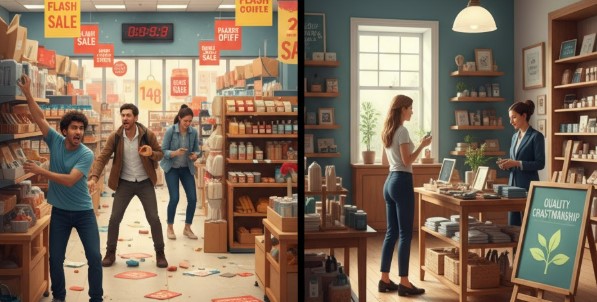
From Urgency to Endurance: Extended Events Can Drive Record Retail Sales by transforming fleeting excitement into sustained customer engagement and loyalty.
Key Takeaways
- Extend sales events to build lasting customer relationships.
- Create a narrative around your extended promotions.
- Leverage multiple marketing channels for wider reach.
- Implement loyalty programs to reward repeat customers.
- Analyze data to refine your endurance event strategies.
As a retail business owner, you know the thrill of a successful flash sale or a weekend promotional blitz. That burst of urgency often leads to a satisfying spike in sales. But what if you could harness that energy and turn it into something more sustainable? What if you could move beyond short-term urgency and build endurance in your sales strategies? This guide explores how extending your promotional events can lead to not just immediate gains, but also lasting customer loyalty and record-breaking retail sales. We’ll break down how to transition from a quick burst of activity to a more strategic, enduring sales approach.
The Power of Extended Sales Events
Many retailers rely on short, intense sales periods to drive immediate revenue. Think Black Friday, Cyber Monday, or seasonal clearance events. These are fantastic for creating a sense of urgency, which is a powerful psychological trigger for purchasing. Customers feel they need to act fast before the deal disappears. However, this urgency can also lead to a “feast or famine” cycle in sales. What happens after the event ends? Sales often plummet back to baseline, leaving you scrambling for the next quick win.
This is where the concept of “urgency to endurance” comes into play. Instead of a single, high-impact event, consider deploying longer, more sustained promotional periods. These “endurance events” aim to maintain customer interest and purchasing momentum over a longer timeframe, not just a few days. The goal is to build a consistent flow of sales rather than relying on sporadic surges.
Leading retailers understand that building a loyal customer base takes time and consistent engagement. According to Bain & Company, increasing customer retention rates by just 5% can increase profits by 25% to 95% (Bain & Company). Extended sales events are a powerful tool to foster this endurance, turning one-time buyers into repeat customers and brand advocates.
Why Extend Your Retail Promotions?
Shifting from short bursts to extended promotional periods offers several strategic advantages. It’s not just about making more sales; it’s about building a stronger, more resilient retail business.
1. Deeper Customer Engagement
Short sales can feel like a sprint. Extended events are more like a marathon, allowing you to build a narrative and connect with your audience on a deeper level. You have more time to communicate your value proposition, tell your brand story, and build trust. This sustained interaction can foster stronger customer relationships than a quick transaction ever could.
2. Broader Reach and Accessibility
Not everyone can shop during a 24-hour sale. Extended events accommodate different customer schedules and preferences. Your audience can engage with your promotions when it’s convenient for them, whether that’s during their lunch break, on a weekend, or over several weeks. This inclusivity can significantly broaden your customer base and capture sales that might otherwise be missed.
3. Enhanced Brand Perception
Constantly running short, aggressive sales can sometimes devalue your brand, making customers wait for discounts rather than purchasing at full price. Extended, well-planned events, however, can be positioned as opportunities for customers to explore your offerings and discover value over time. This approach can enhance your brand’s image, portraying it as generous and customer-focused.
4. Data Collection and Optimization
A longer sales period provides more opportunities to collect valuable customer data. You can track which offers are most popular, which marketing channels are most effective, and customer behavior patterns over time. This data is crucial for refining your strategies, understanding your audience better, and making smarter business decisions for future promotions and product development.
5. Increased Lifetime Customer Value
The ultimate goal is to increase the lifetime value (LTV) of your customers. Extended events allow you to nurture new customers and encourage repeat purchases from existing ones. By offering consistent value and building rapport, you increase the likelihood that customers will return to you again and again, making each customer more valuable over the long term.
Strategies for Implementing Extended Sales Events
Transitioning to an endurance sales model requires a shift in mindset and strategy. Here’s how you can effectively implement extended promotional events to boost your retail sales.
Step 1: Define Your “Endurance” Theme and Narrative
Instead of just saying “Sale Extended!”, create a compelling theme. This theme should guide your messaging and promotions over the entire period. Think about what makes this extended event special.
- Seasonal Celebrations: A “Summer of Savings” or “Fall Fashion Fest” that lasts for a month.
- Anniversaries/Milestones: A “Birthday Bonanza” celebrating your store’s X years in business with weekly surprises.
- Themed Collections: “Discover Your Perfect Cozy Corner” for home goods, running for two weeks.
- Problem/Solution Focus: “Beat the Heat” with special offers on cooling products throughout July.
Develop a backstory for your event. Why are you extending this sale? Is it due to popular demand? Is it to give more people a chance to experience your brand? A strong narrative makes the event more engaging and memorable.
Step 2: Structure Your Extended Event
A long sale can become monotonous if it’s the same offer day in and day out. Structure is key to keeping customers engaged.
- Phased Discounts: Start with a moderate discount and gradually increase it as the event progresses, or vice versa.
- Weekly or Daily Specials: Highlight different product categories or specific items each week or day. This creates new reasons for customers to check back.
- Tiered Rewards: Offer increasing benefits for higher spending. For example, 10% off for $50, 15% off for $100, and 20% off for $150.
- Exclusive Access: Offer early access to deals for email subscribers or loyalty program members.
Step 3: Leverage Multi-Channel Marketing
To reach a wider audience and maintain consistent visibility, you need to be present across multiple platforms.
- Email Marketing: Announce the event, send reminders, share weekly specials, and highlight specific products. Segment your lists to send targeted offers.
- Social Media: Use a consistent hashtag for your event. Post engaging content – behind-the-scenes, customer testimonials, product spotlights, countdowns to new weekly deals. Run targeted ads.
- Website Banners and Landing Pages: Make your extended event the star of your website. Create a dedicated landing page that clearly explains the event, its duration, and current offers.
- SMS Marketing: For customers who opt-in, send timely alerts about new deals or expiring offers.
- In-Store Signage: Ensure your physical store reflects the extended promotion with clear, attractive signage. Train staff to inform customers about the ongoing event and its benefits.
- Paid Advertising: Use Google Ads and social media ads to drive traffic to your event landing page.
Step 4: Integrate Loyalty Programs
Extended events are the perfect opportunity to boost your loyalty program. Reward customers for participating in your extended sales.
- Bonus Points: Offer double or triple points on purchases made during the event.
- Exclusive Discounts for Members: Provide members with an extra discount on top of existing sale prices.
- Early Access to Future Sales: Promise loyalty members early notification or access to your next promotion.
- Loyalty Tiers: Encourage customers to reach higher loyalty tiers by spending during the event, unlocking greater benefits.
A well-structured loyalty program incentivizes repeat purchases and turns casual shoppers into dedicated fans. According to recent studies, loyalty program members tend to spend more and purchase more frequently than non-members (Oracle Retail).
Step 5: Create Scarcity and Urgency (Strategically)
Even in an endurance event, you can strategically reintroduce elements of urgency to drive action.
- Limited Stock Alerts: “Only 10 left at this price!”
- Time-Sensitive Bundles: Offer a special bundle deal that’s only available for 24 or 48 hours within the larger event.
- Flash Deals: Announce surprise flash sales on specific items for a few hours.
- End-of-Event Countdown: As the event nears its conclusion, ramp up messaging about the final hours.
This strategic use of urgency prevents the event from becoming stale and encourages customers to make decisions sooner rather than later.
Step 6: Analyze and Adapt
The beauty of an extended event is the wealth of data you can gather. Don’t just run it and forget it. Continuously monitor performance.
- Track Sales by Product/Category: See what’s resonating most.
- Monitor Website Traffic: Understand where your visitors are coming from.
- Analyze Conversion Rates: Identify bottlenecks in your sales funnel.
- Measure Marketing Campaign Performance: See which channels are driving the most valuable traffic.
Use this data to make real-time adjustments. If a particular product is selling out quickly, consider increasing your stock or promoting a similar alternative. If a marketing channel isn’t performing, reallocate your budget.
Examples of Successful Extended Events
Let’s look at how different types of retailers can implement this strategy:
| Retailer Type | Extended Event Concept | Duration | Marketing Angle | Customer Benefit |
|---|---|---|---|---|
| Apparel Boutique | “Style Refresh: Spring Collection Showcase” | 3 Weeks | Weekly spotlight on different categories (dresses, tops, accessories). Early bird discount for loyalty members. | More time to discover new styles, phased discounts, loyalty perks. |
| Electronics Store | “Tech Upgrades: Your Upgrade Journey” | 4 Weeks | “Deal of the Week” for major categories (laptops, TVs, audio). Bundle offers on complementary items. | Opportunity to research and compare, flexible purchasing, value bundles. |
| Home Goods Store | “Cozy Comforts: Autumn Living” | 2 Weeks | Daily featured “cozy item.” Weekend workshops (online/in-store) related to home comfort, with exclusive discounts for attendees. | Focus on lifestyle, actionable tips, and exclusive event access. |
| Bookstore | “Literary Escape: A Month of Reading” | 1 Month | Weekly “genre spotlight” with curated book lists and discounts. Author Q&A sessions (virtual). | Encourages exploration of different genres, educational content, and community interaction. |
These examples show how the “endurance” model can be adapted to various retail sectors, focusing on sustained engagement rather than a single, short-lived surge.
Comparing Short-Term Urgency vs. Long-Term Endurance
To better understand the strategic shift, let’s compare the two approaches side-by-side:
| Feature | Short-Term Urgency-Based Sales | Long-Term Endurance-Based Events |
|---|---|---|
| Primary Goal | Immediate sales spike, inventory clearing. | Sustained sales, customer loyalty, LTV growth. |
| Customer Psychology | Fear of Missing Out (FOMO), impulse buying. | Value discovery, relaxed decision-making, brand appreciation. |
| Marketing Focus | Announcing deadline, limited-time offers. | Building a narrative, consistent value communication, phased engagement. |
| Customer Engagement | Transactional, short-lived. | Relationship-building, ongoing interaction. |
| Data Potential | Limited, focused on immediate purchase data. | Rich, detailed behavioral data over time for optimization. |
| Risk | Sales drop-off post-event, brand devaluation. | Potential for customer fatigue if not managed well, requires sustained effort. |
While both have their place, the trend in modern retail is moving towards strategies that foster long-term relationships and sustained engagement, making endurance events increasingly crucial for competitive success.
Pro Tip: Personalize the Extended Experience
Leverage customer data to personalize offers within your extended event. Instead of a one-size-fits-all promotion, segment your audience based on past purchases, browsing history, or expressed interests. Sending targeted emails with relevant product suggestions or exclusive offers for specific customer groups can significantly boost conversion rates and make customers feel valued.
Overcoming Challenges of Extended Events
While beneficial, endurance events aren’t without their challenges. Anticipating and addressing these can ensure a smoother, more successful rollout.
Challenge 1: Preventing Customer Fatigue
A sale that lasts too long without novelty can become background noise. Customers might tune out if the message, offers, or products don’t change.
Solution: Implement a phased approach with weekly themes, daily specials, or surprise flash deals. Keep your content fresh by showcasing different product benefits, user-generated content, or behind-the-scenes glimpses. Regularly refresh your website banners and social media creatives to maintain visual interest.
Challenge 2: Maintaining Profit Margins
Extending discounts for longer periods can eat into your profit margins if not managed carefully.
Solution: Focus on increasing volume and customer lifetime value. Strategically use tiered discounts that reward higher spending. Offer value-added services or bundles that have higher perceived value but lower incremental cost. Track your Cost of Goods Sold (COGS) and optimize pricing based on demand and inventory levels.
Challenge 3: Resource Allocation
Sustaining marketing efforts, customer service, and inventory management over an extended period requires consistent resources.
Solution: Plan your resource allocation well in advance. Automate marketing campaigns where possible. Train your customer service team to handle increased volume and inquiries related to the event. Ensure your inventory management system can accurately track stock levels and trigger reorder points to prevent stockouts.
Challenge 4: Measuring Success Accurately
Distinguishing the impact of the extended event from regular sales fluctuations can be tricky.
Solution: Establish clear Key Performance Indicators (KPIs) before the event begins. Track metrics like average order value, conversion rate, customer acquisition cost, and customer retention rate specifically during the event period. Compare these to similar periods before and after the event (e.g., the month before, the month after) and to the same period last year to gauge true impact.
Frequently Asked Questions (FAQ)
Q1: What is an “endurance event” in retail?
An endurance event is a retail promotion that is designed to run for an extended period, such as weeks or even a month, rather than a few days. The goal is to build sustained customer engagement and loyalty, moving beyond short-term urgency.
Q2: How is an endurance event different from a typical sale?
Typical sales focus on creating immediate urgency with short deadlines. Endurance events focus on building a narrative, offering ongoing value, and providing more opportunities for customers to engage and purchase at their convenience, fostering longer-term relationships.
Q3: Can small businesses benefit from extended sales events?
Yes! Small businesses can use endurance events to build a stronger local following, test new products over time, and offer unique, themed promotions that resonate with their community. The key is careful planning and communication.
Q4: How do I avoid making my extended sale boring?
Keep it engaging by introducing new deals weekly or daily, highlighting different product categories, telling stories, offering exclusive content, and using interactive elements like polls or Q&As on social media.
Q5: What kind of products are best suited for endurance events?
Virtually any product can work, but items that benefit from research, comparison, or lifestyle integration (like home goods, fashion, or tech) lend themselves well to longer promotional periods. It’s more about the strategy than the product itself.
Q6: Should I still use urgency tactics during an endurance event?
Yes, strategic use of limited stock alerts, flash deals on specific items, or end-of-event countdowns can reintroduce urgency and prompt customers to act without making the entire event feel rushed.
Conclusion
Moving from urgency to endurance in your retail sales strategy is a powerful way to build a more robust and customer-centric business. By extending your promotional events, you do more than just drive immediate sales; you foster deeper customer relationships, enhance brand perception, and create a more predictable revenue stream. The key lies in thoughtful planning, creating a compelling narrative, structuring your offers strategically, leveraging multi-channel marketing, and continuously analyzing your performance. While flash sales have their place, embracing the endurance model allows you to cultivate lasting loyalty and achieve sustained growth. As you implement these strategies, remember that consistency, value, and genuine customer engagement are the cornerstones of long-term retail success. Start planning your next endurance event today and watch your sales grow, not just in spikes, but in sustained, powerful waves.
